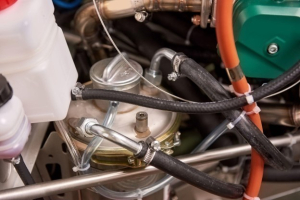

Cooling System Hoses
-
- February 19, 2026
When cooling system hoses move coolant through the engine and radiator without interruption, they prevent heat from building up and keep the engine running at a safe temperature.
A dependable cooling system plays a crucial role in protecting heavy-duty engines. Proper hose performance is often overlooked, yet these parts do the nonstop work of moving coolant where it needs to go.
When hoses stay strong and intact, the engine stays cool. If they fail, temperatures climb fast.
In this blog, you'll learn how hoses manage heat, which hose qualities matter most, and why consistent coolant flow is essential for trucks on long routes.
The Role of Coolant Flow
Coolant must travel in a steady loop. It absorbs heat from the engine and carries that heat to the radiator. Cooling system hoses make this movement possible.
They form the path that keeps coolant circulating. When these hoses stay clear and strong, the coolant does not slow down.
Heat leaves the engine before it becomes a problem. This simple
-
- November 17, 2025When you're dealing with OEM parts, you're also dealing with a ticking clock. Regular steel engine dipstick tubes wear down fast, and tracking down replacements can take longer than you'd like, especially for older truck models.
At BH Tubes, we know how frustrating that downtime can be. That's why it pays to vet your components before they cost you time and business. Let's talk about what makes one dipstick tube better than the next, and how to find a part that truly holds up.
A Basic Reality/Problem with OEM Parts
OEM parts are built to meet the bare minimum. Most engine dipstick tubes use regular steel that cannot keep up with the demands of long-haul driving. Over time, they rust, corrode, or snap, which means another round of calls and costly replacements.
The bigger problem? Availability.
Many OEM tubes are either discontinued or stuck in nationwide backorder cycles. That leaves truckers, garages, and dealerships stuck waiting, or worse, scrambling for alternatives.
Every delay eats -
- November 02, 2025Every mile counts when you are hauling loads across long routes, and a breakdown can mean missed deadlines, lost income, and plenty of stress. Worn cooling system hoses are one of the most overlooked culprits behind costly downtime. When they fail, engines overheat, and schedules fall apart.
Truck drivers, garages, and dealers know that even a few hours off the road can create a chain reaction of problems. Protecting your rig with the right parts is not just smart but essential.
Why Cooling System Hoses Matter in Heavy-Duty Trucks
Engines in heavy-duty trucks work harder than most. Long hauls, steep grades, and heavy loads constantly stress every part under the hood. These hoses carry coolant through the engine, keeping temperatures stable and preventing damage.
When these hoses lose their strength, heat builds up fast, leading to engine failure and expensive repairs. Truck drivers and repair shops know that the smallest part can have the biggest impact on performance.
Reliable hoses are -
- August 28, 2025
You don't often hear someone get excited about tubing. But if you're working in EV systems, robotics, or high-spec machinery, you know just how critical the right components can be—especially the ones nobody thinks about until something fails.
SS steel tubing has quietly become one of those unsung heroes. While not new, it has evolved to meet the growing demands of modern manufacturing. Today, stainless steel tubing must handle temperature swings, chemical exposure, and integrate with digital sensors—all at once.
Driving Precision in Electric Vehicles
Modern electric vehicles require clean, efficient, and durable components. SS steel tubing is used in cooling systems, high-pressure battery enclosures, and thermal management lines. It must withstand tight spaces, high vibrations, and extreme temperature fluctuations while performing consistently in critical environments.
Robotics and Motion Systems Rely on Structural Integrity
Automation systems are only as strong as their weakest component.
-
- August 13, 2025
Machinery engines work hard, often under extreme temperatures and pressure. Cooling system hoses keep the engine safe and help it function efficiently. These rubber or silicone lines carry the coolant from the radiator to the engine and back, preventing overheating, power loss, and irreversible engine damage. But as with any hardworking component, these hoses don't last forever.
Let's walk through a few proven ways to extend the life of your cooling system hoses so you're not caught off guard by leaks, cracks, or costly downtime.
Start with Regular Inspections
Cooling system hoses don't suddenly fail—they wear down over time. That's why routine inspections are your first and strongest defense. Here's what to look for:
- Cracks or splits, especially around the ends and bends
- Soft spots that feel squishy or sponge-like under pressure
- Bulging or blistering, a sign of pressure imbalance
- Leaks or dried coolant residue around the hose connections
Always inspect hoses when the engine is cool. Gently
-
- March 23, 2025Your truck's cooling system is a core part of keeping your engine running smoothly. Its essential components are cooling system hoses, which transport coolant between the engine, radiator, and other cooling system parts. These hoses play a critical role in maintaining the optimal temperature for your engine, preventing overheating, and ensuring long-term performance. But like any other part of your vehicle, cooling system hoses don’t last forever. In this blog post, we'll discuss how to spot the signs of wear and tear, when to replace old hoses, and why replacement is essential for safety and performance.
Why Cooling System Hoses Matter
Every vehicle relies on a well-maintained cooling system to regulate engine temperatures. Coolant flows through the cooling system hoses, ensuring the engine operates within the ideal temperature range, especially during extreme weather conditions. If a hose becomes worn, cracked, or fails, it disrupts this flow, causing the engine to overheat. Overheating -
- September 17, 2024Selecting the right cooling system hoses for your truck is essential to ensure its longevity and reliable performance. With so many options available, it can be challenging to identify hoses that meet the high demands of heavy-duty trucking. The cooling system is vital for preventing engine overheating and maintaining optimal performance, making the quality of your cooling system hoses a top priority.
In this guide, we'll explore the key features of high-quality truck coolant hoses, the advantages of silicone coolant hoses, and where to source premium options to keep your truck running smoothly.
Key Features of High-Quality Truck Coolant Hoses
Material Durability
The material used in the hose construction significantly affects its performance and lifespan. Truck coolant hoses are typically made from robust materials like EPDM (Ethylene Propylene Diene Monomer) or silicone, which offer excellent resistance to temperature extremes, chemical exposure, and environmental wear.
Temperature and